
WELCOME BONUS 300%
UP TO €2000 + 100
FREE SPINS
UP TO €2000 + 100
FREE SPINS
Home → Roulette
Roulette at Fugu Casino
How Payout Odds 35:1 Are Achieved
European Roulette, with its single zero and 37 sectors, provides the standard 35:1 payout for a straight bet. This payout ratio is consistent across all bet types on this wheel, including splits, streets, and corners. The house edge on European Roulette stands at a relatively low 2.70%, contributing to a player RTP of 97.30%.
The mathematical foundation for the 35:1 payout is derived from the 37 available sectors on the European roulette wheel. A straight bet covers a single number, and with 37 possible outcomes, the odds of winning are 1 in 37. The payout is calculated as (37-1) to 1, resulting in the 35:1 ratio.
In contrast, American Roulette features an additional '00' sector, bringing the total to 38. While the payout for a straight bet remains 35:1, the increased number of sectors raises the house edge to 5.26%. This means for every €100 wagered on a straight bet in American Roulette, the expected return is lower than on a European wheel.
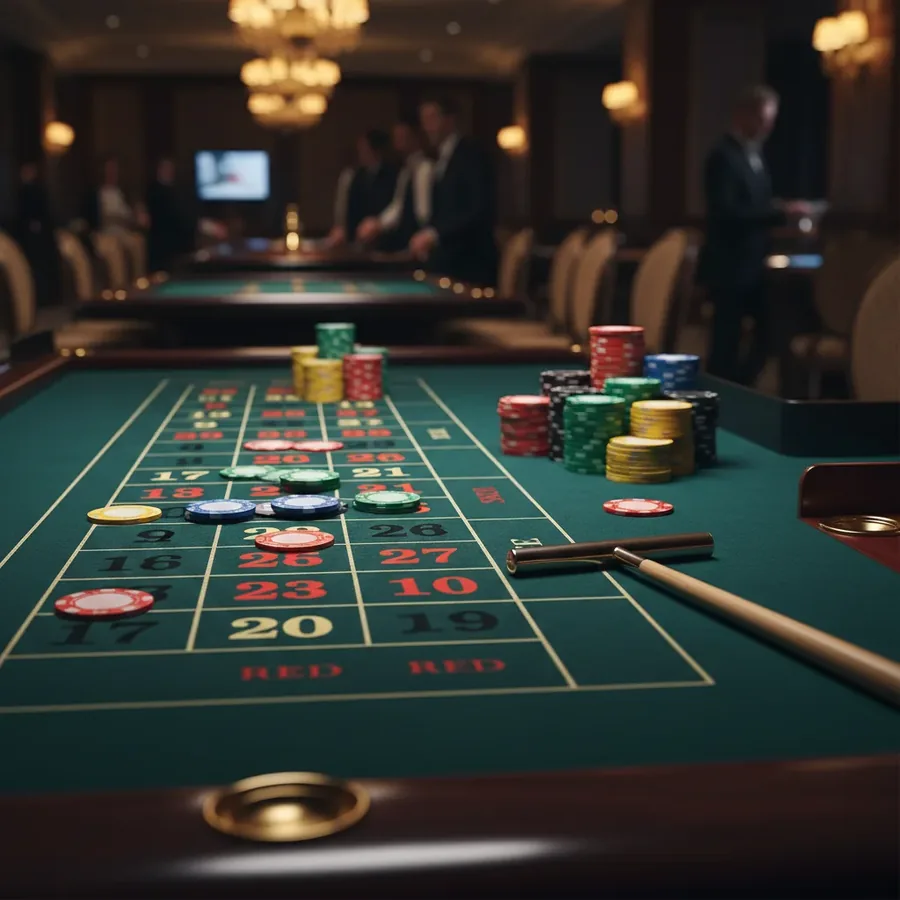
Payout Table from 35:1 to 1:1
The highest payout available in most roulette variants is the 35:1 for a straight bet, covering a single number. This applies to European and French Roulette, where the wheel has 37 sectors. The RTP for European Roulette is 97.30%, with a house edge of 2.70% on all bets.
Moving down the payout table, a split bet, covering two adjacent numbers, pays 17:1. A street bet, covering three numbers in a row, yields 11:1. For corner bets, which cover four numbers, the payout is 8:1. These payouts are consistent across standard European and French roulette games.
Even money bets, such as red/black, odd/even, or high/low (1-18/19-36), offer the lowest payout of 1:1. These bets cover 18 numbers, providing players with a near 50/50 chance of winning. In French Roulette with the La Partage rule, these even money bets can have a significantly reduced house edge of 1.35% when a zero occurs.
La Partage Halves Loss on Zero
The La Partage rule in French Roulette significantly benefits players by reducing the house edge on even money bets. When the ball lands on zero, half of the player's stake on bets like red/black or odd/even is returned. This rule is specifically applicable to these outside bets only.
This rule effectively halves the house edge on even money bets from 2.70% to 1.35%. For example, a €10 bet on red would normally be lost if zero comes up. With La Partage, €5 of that €10 bet is returned, making the potential loss on that spin only €5.
The La Partage rule does not apply to inner bets such as straight, split, or corner bets. Therefore, if zero appears, these bets are lost entirely, maintaining the standard 2.70% house edge for those wager types. The RTP for French Roulette with La Partage on even chances is 98.65%.
Error: Expecting La Partage at the Wrong Table
Players seeking the advantage of the La Partage rule should be aware that it is exclusively a feature of French Roulette, specifically on even money bets. Standard European Roulette, while offering a similar RTP of 97.30%, does not incorporate this rule. The house edge remains a consistent 2.70% on all bets in European Roulette.
Attempting to find La Partage in American Roulette is futile, as this variant already carries a higher house edge of 5.26% due to the double zero. The French Roulette table with La Partage offers a superior player return of 98.65% on the eligible bets, making it a more favourable choice.
It is crucial to identify the specific table rules before placing bets. French Roulette without La Partage, for instance, will not refund half the stake on zero for even money bets, meaning the house edge reverts to 2.70% for those wagers. Always confirm the game variant displayed.
Multiplier 500x Applies Only to Straight Bets
In special roulette variants like Lightning Roulette and Quantum Roulette, multipliers can significantly enhance payouts on certain numbers. These multipliers, which can reach up to 500x, are typically applied to straight-up bets on individual numbers. For instance, a €10 straight bet on a lucky number could win €5,000 if a 500x multiplier is applied.
These amplified wins are exclusive to single number bets. For other bet types, such as split, street, or even money bets, the standard payouts apply, without any multiplier enhancement. For example, a winning even money bet in Quantum Roulette will still pay 1:1, irrespective of any multipliers active on other numbers.
The RTP for Lightning Roulette and Quantum Roulette is stated as 97.30%, similar to European Roulette. However, the presence of multipliers means that the actual return can fluctuate based on which numbers are selected and whether they are assigned a multiplier. The maximum payout for a straight bet is capped by the multiplier, not the standard 35:1 odds.
Roulette bet types at a glance
| Bet | Payout | Win Chance | Numbers Covered | House Edge |
|---|---|---|---|---|
| Roulette Amerikanisch – Five Number Bet (0, 00, 1, 2, 3) | Five Number 6:1 (deckt 5 von 38 Sektoren) | 92.11% | Einzige Wette am amerikanischen Rad mit Edge über 5,26% – „Fallenwette“. Kein Äquivalent am europäischen Rad | 7.89% |
| Roulette Europäisch (einfache Null, 37 Sektoren) | Straight 35:1, Split 17:1, Street 11:1, Corner 8:1, Six Line 5:1, Dozen 2:1, Column 2:1, Rot/Schwarz 1:1, Odd/Even 1:1, 1-18/19-36 1:1 | 97.30% | 37 Sektoren (1–36 + 0); Auszahlungen wie für 36 Sektoren – daher konstanter Edge auf ALLE Wetten | 2.70% |
| Roulette Französisch, innere Einsätze (La Partage gilt nicht) | Straight 35:1, Split 17:1, Street 11:1, Corner 8:1, Six Line 5:1, Dozen 2:1, Column 2:1 | 97.30% | Rad gleich (37 Sektoren), aber La Partage/En Prison gilt nicht für innere Einsätze – Edge bleibt europäisch | 2.70% |
| Roulette Französisch mit La Partage (gerade Chancen) | Rot/Schwarz 1:1 (bei 0 Rückerstattung 50%), Odd/Even 1:1, Low/High 1:1; Innere Einsätze ohne La Partage: Straight 35:1, Split 17:1, Street 11:1, Corner 8:1 | 98.65% | Bei 0 wird die Hälfte des Einsatzes auf gerade Chancen zurückerstattet (Rot/Schwarz, Pair/Impair, Manque/Passe). En Prison gibt denselben 1,35%. Regel gilt NUR für gleiche Einsätze | 1.35% |
| Roulette Amerikanisch (doppelte Null, 38 Sektoren) | Straight 35:1, Split 17:1, Street 11:1, Corner 8:1, Six Line 5:1, Dozen 2:1, Column 2:1, Rot/Schwarz 1:1 | 94.74% | 38 Sektoren (1–36 + 0 + 00); Auszahlungen wie beim europäischen Rad, aber der zusätzliche Sektor verdoppelt den Hausvorteil | 5.26% |
La Partage Applies Only to Even Chances
The French Roulette variant with La Partage rule, when applied to even chances, offers an RTP of 98.65%. This is achieved by refunding half of the bet when the ball lands on zero for bets like Red/Black, Odd/Even, or Low/High. This specific rule significantly reduces the house edge on these bets.
For instance, a 10 € bet on Red at a table where La Partage applies would result in a 5 € refund if zero appears, instead of losing the entire stake. This contrasts with internal bets, where La Partage does not apply, maintaining the standard European roulette house edge.
Players should note that while the RTP is enhanced for even chances, internal bets on French Roulette without La Partage retain the standard 97.30% RTP. Therefore, understanding which bets qualify for the La Partage rule is crucial for maximizing potential returns.
How Much to Bet for 10 Percent Contribution?
Wagering contributions for table games at this casino are set at 10 percent. This means that for every 100 € wagered on table games, only 10 € will count towards fulfilling the bonus wagering requirements. This percentage applies across various table game categories.
Considering the 300% welcome bonus up to €2,000, a player aiming to clear the bonus through table games would need to bet significantly more than the bonus amount. For example, to wager the full €2,000 bonus, a player would need to place a total of €20,000 in bets on table games (2,000 € bonus x 10 = 20,000 € turnover).
This 10 percent contribution rate means that players choosing table games like French Roulette (97.30% RTP) or European Roulette (97.30% RTP) will require a substantially higher turnover volume compared to games with a 100% contribution. For instance, 100 € wagered on slots would count fully towards the wagering, while 100 € on roulette only counts as 10 €.
House Edge 2.70 Percent in One Number
The house edge for standard European Roulette, which features 37 sectors including a single zero, stands at 2.70%. This edge is consistent across all bet types on the European wheel, from single number bets to even chances. The payout for a straight-up bet on a single number is 35:1.
This 2.70% house edge means that for every 100 € wagered on European Roulette, the casino expects to retain 2.70 € over the long term. This figure remains constant whether a player bets on a single number like '17' or on an even chance like 'Red'.
By comparison, American Roulette, with its additional '00' sector, presents a higher house edge of 5.26%. French Roulette variants, however, can offer a reduced house edge on even chances when the La Partage rule is active, potentially lowering it to 1.35%.
D'Alembert and Fibonacci Against the Same Table Limit
The operational table limits for live roulette games, such as Auto Roulette Classic 1 Live, range from 0.10 € to 2,000 €. These limits apply to the total bet placed per round, regardless of the betting strategy employed by the player. This range is consistent across many live roulette offerings.
This means that betting systems like D'Alembert, which involve increasing bets after a loss, or Fibonacci, which follows a sequence of increasing bets, are subject to the maximum bet of 2,000 € per round. A player employing the D'Alembert system on a 10 € bet might increase their stake after a loss, but cannot exceed the 2,000 € maximum.
Similarly, the Fibonacci system's progressive betting patterns are constrained by the 2,000 € table limit. While these strategies aim to manage risk or recoup losses, the fixed upper limit ensures that losses can still escalate significantly, particularly on even chance bets with a 1:1 payout.
Max Bet Per Number vs. Max Bet Per Round
The maximum bet per round on many roulette tables, including live variants like Lightning Roulette, can reach up to 5,000 €. This limit dictates the total amount a player can wager across all their chosen bets within a single spin of the wheel. This applies to all bet types on the table.
This implies that if the maximum bet per round were, for example, 100 € spread across multiple numbers, a single number bet within that round would be limited by the overall round's maximum. However, typically, the per-number bet is also subject to its own limits, often derived from the overall round maximum.
For instance, if a player were to bet on a single number in Lightning Roulette with a 5,000 € maximum bet per round, the potential payout on that single number would be substantial, assuming it is not one of the enhanced multiplier numbers. The structure ensures that while multipliers can increase potential wins, the fundamental betting limits of the table still apply.
Quantum Roulette: Which Numbers Get Multipliers
Quantum Roulette, offered by Playtech, features Quantum multipliers that can reach up to 500x on specific numbers. These multipliers add a dynamic element to the standard European wheel, which has a 2.70% house edge on single-zero spins. The inclusion of these multipliers means that while the base RTP remains 97.30%, potential payouts can be significantly higher than on a standard table.
In Quantum Roulette, the multipliers are applied to 1 to 5 numbers per round, introducing an element of unpredictability. This contrasts with Lightning Roulette, which also features multipliers but operates on a different principle. Players aiming for the highest potential returns should pay close attention to which numbers are selected for these enhanced payouts each spin.
The impact of these multipliers on the overall player return is substantial, although the base RTP is 97.30%. For instance, a 500x multiplier on a straight-up bet of €10 would yield €5,000, significantly exceeding the standard 35:1 payout. Players should note that these multipliers are applied randomly, making them a feature of chance rather than a predictable outcome.
La Partage: What 50 Percent Return Means
La Partage, a rule found in French Roulette, specifically benefits even-chance bets such as Red/Black, Odd/Even, and 1-18/19-36. When the ball lands on zero during these bets, 50% of the player's stake is returned. This rule effectively reduces the house edge on these specific bets from 2.70% to 1.35%.
This 50 percent return mechanism significantly enhances the player's advantage on even-chance wagers. For example, a €10 bet on Red would normally lose if zero hits; however, with La Partage, €5 is returned to the player. This feature is exclusively applied to even-chance bets and does not extend to inside bets on the European wheel.
The practical implication of La Partage is a more favorable playing environment for those who favour simple bets. A €20 stake on an even chance bet that lands on zero would result in a €10 refund, unlike on standard European Roulette where the entire stake would be lost. This rule is a key differentiator for French Roulette tables offering it.
Martingale Fails at Table Limit After 8 Losses
The Martingale betting system, which involves doubling one's bet after each loss, is susceptible to table limits. For instance, on a table with a maximum bet of €2,000, a player starting with a €10 bet would face significant challenges after a series of losses. This strategy's reliance on progressive increases makes it vulnerable to such restrictions.
Consider a scenario where a player begins with a €10 bet and employs the Martingale strategy. After 8 consecutive losses, the bet would escalate to €2,560 (€10 x 2^8). This amount exceeds the €2,000 maximum bet limit at many tables, effectively halting the progression of the system and leading to a substantial overall loss.
The consequence for a player employing Martingale is that even a short losing streak can quickly reach the table's maximum wager. For example, a player might experience 8 losses in a row, requiring a bet of €2,560. If the table limit is €2,000, the player cannot place the required bet, thus losing the accumulated stakes and any potential to recover.
How Lightning Roulette Draws 1 to 5 Numbers
Lightning Roulette, a popular variant developed by Evolution, incorporates a random multiplier feature on 1 to 5 numbers each round. These randomly selected 'Lightning Numbers' are then assigned multipliers ranging from 50x to 500x. This adds a significant layer of excitement and potential payout beyond the standard game payouts.
In each round of Lightning Roulette, a digital random number generator determines which numbers will become Lightning Numbers and the value of their multipliers. This process ensures that no two rounds are exactly alike, offering a dynamic betting experience on the 37-sector European wheel. The base RTP remains 97.30%.
The effect of these multipliers can be substantial; for example, a straight-up bet of €1 on a number that becomes a Lightning Number with a 500x multiplier would yield €500. This contrasts with the standard 35:1 payout for a straight-up bet on a European wheel. Players should be aware that the multipliers are applied to a limited selection of numbers.
Why 5.26 Percent is Rarely Recommended
The 5.26 percent house edge is characteristic of American Roulette, primarily due to the presence of both a single zero (0) and a double zero (00). This dual-zero wheel offers 38 sectors, increasing the number of possible outcomes compared to the European 37-sector wheel, thereby increasing the casino's advantage.
On an American Roulette wheel, the 'Five Number Bet' (covering 0, 00, 1, 2, and 3) is particularly disadvantageous, boasting a house edge of 7.89%. This is significantly higher than the standard 5.26% edge on other bets on the same wheel. This specific bet is unique to American wheels and has no direct equivalent on European tables.
The consequence of playing on an American Roulette wheel with a 5.26% house edge is a slower rate of return for the player over the long term. For every €100 wagered, the theoretical return is €94.74, meaning the casino expects to retain €5.26. This makes it less favourable for players compared to European Roulette's 2.70% house edge.
Contact
Live - online chat
Banking






Providers










Fugu Casino 2026